136kHz 'portable station" project by PA4VHF, Dick

21-04-2006 up-date:

During our stay in LX later this year I want to take some equipment for 136kHz with me.
As my existing station has only 'limited' power, and probably not capable of being on the air for longer periods, I decide to set up a complete new more robust station
for the DX-pedition.
The idea is to use a mix of the G0MRF design, and the G3YXM output circuit
with 4 times IRFP450

At the moment I'm building the transmitter block.
Next parts will be band filter and pre-amp unit as well as RX and TX antennas.
Especially the antennas will be a challenge as they must be quickly and easy to set up, because of limited time for antenna building at arrival in LX.

You are able to follow the progress of this rather 'large-long-time' project right here......
 

Resize of P1010046
Resize of P1010047

30-04-2006 up-date:

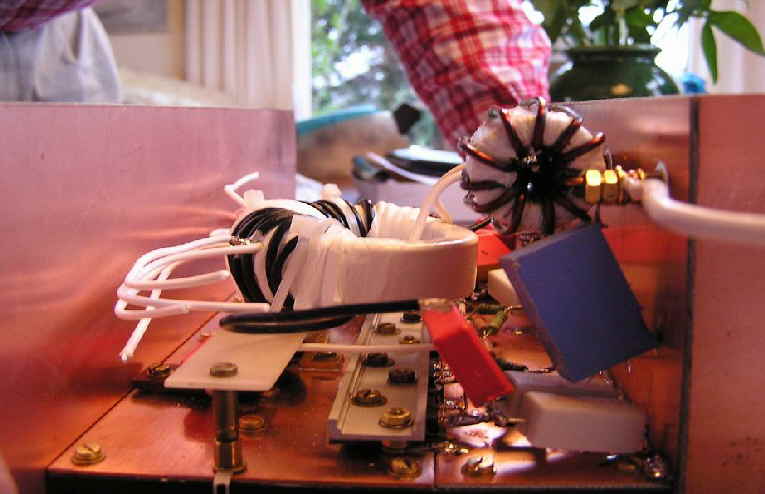
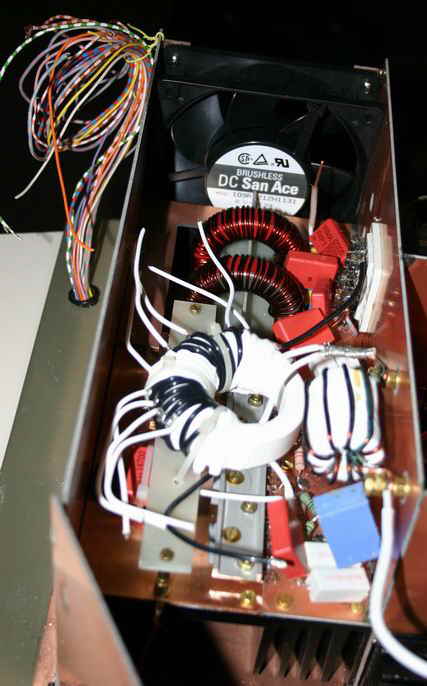
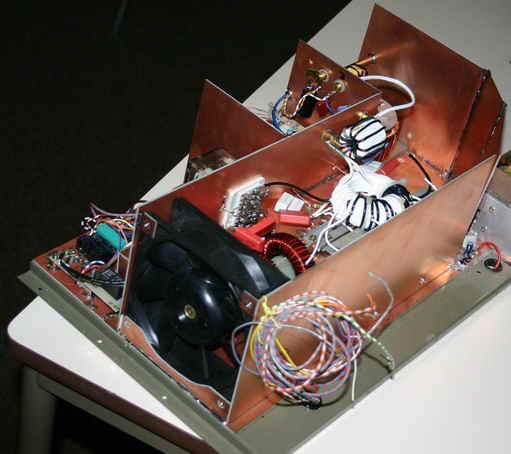
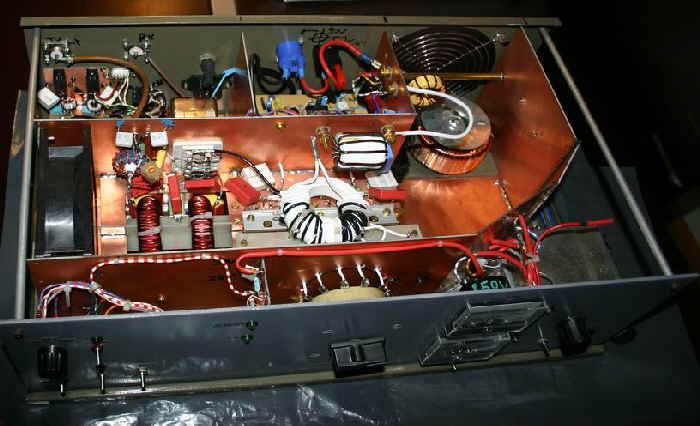
These pictures show the unit in an early stage.
The unit will be made out off several 'blocks' .
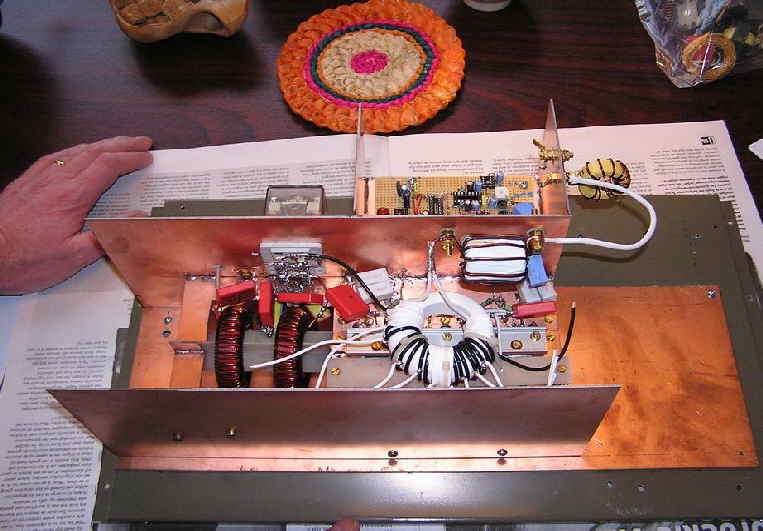
On the pictures you'll see the power stage with 4 times IRFP450 and some other blocks.
Other blocks that follow later: low voltage unit, TX/RX switching, SWR/current protection, RX filter and amplifier etc.

At the left side there will be the main fan, cooling all parts that might become warm.
The idea is to put all these part in a kind of 'chimney' .
Airflow will go from left to right.....at the rightside the airflow will be bend and leave at the backside of the case.
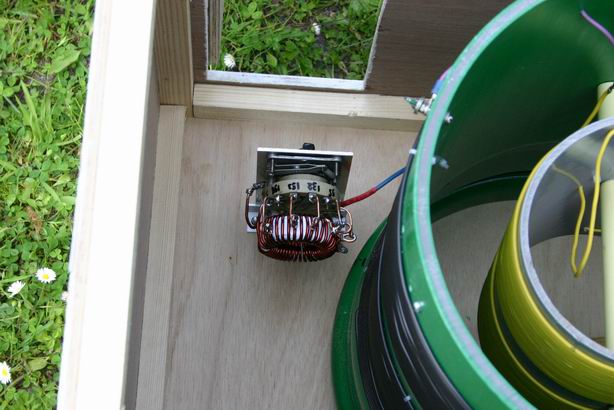
On it is way it will go through the ouput-filter (2 times T225-2), output transformer (3C90 core)
RF-choke made on 3 cores (T106-26) from old PC power supplies.
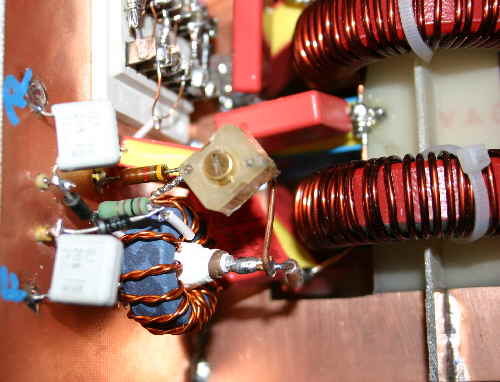
The 'zobel-network' is located underneath the big output transformer and just partially visible in the close up side view.
The white U shaped wire is a piece of resistor wire insulated with PTFE sleeve.
This is part of the current protection circuit.
The small core at the right is another shunt resistor, wound on a core to act as an extra RF-choke(...........) and will feed only a current meter, hihi

Also visible the antenna relay and the driver unit á la G0MRF.

As you might have noticed all bolts and nuts used are brass for lowest resistance and insensitivity against magnetic fields etc.
May this is a bit overkill, hmmmmmm
Anyway it looks nice :-)

Resize of fig3

fig3

06-05-2006 up-date

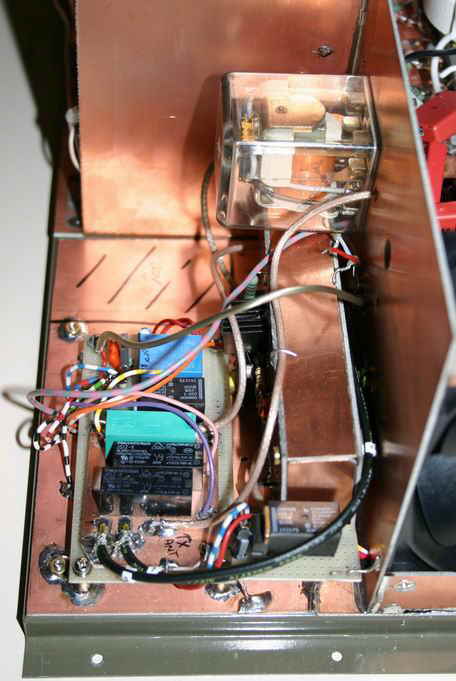
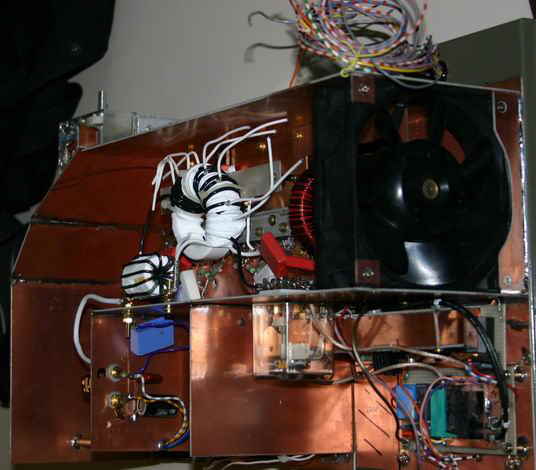
Fig3 , shows the main antenna relais . The box under the relays contains the RX
bandpassfilter with 4 pot core's.
I added a little switch able pre-amp off abt 15dB which is mounted outside
the bandpassfilter unit .
It's a bit better visible in fig 5.
At the left side you see several relays used as TX/RX switching and used to
choose between 3 different RX antennas:
RX antenna = TX antenna or 2 different external RX antennas.
The small relays in front is used for voltage switching on the FAN which
runs at lower speed during RX.
This switching is delayed: when switching from TX to RX, the FAN keeps
running at full speed for a few seconds
before going to half speed (= less background noise during RX)


Re-exposure of Resize of fig4

06-05-2006 up-date

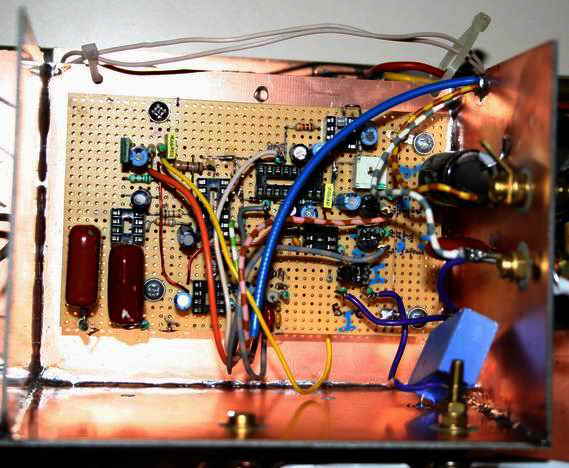
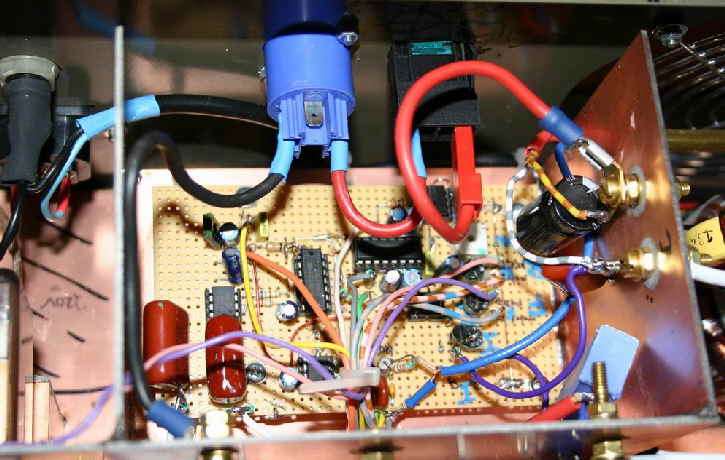
Fig 4, shows the main driver and protection unit. IC's not yet mounted........

fig4

Resize of fig5

fig5

Resize of fig602

fig6

06-05-2006 up-date

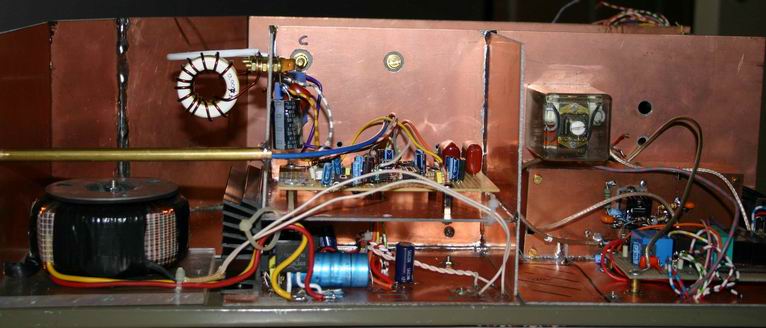
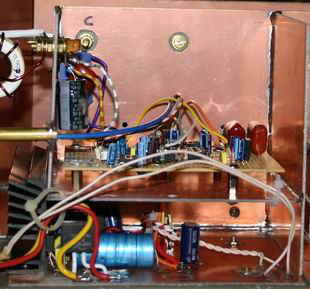
Fig 5. view from the rearside.
On the left the low voltage transformer delivering 12V and 24 V.
Right from it you'll see the rectifier and regulator unit : 24V for the main
TX/RX relay,
12V for the electronics and a separate 12V for the FAN. (see fig 6, for a
better view)

Resize of fig703

fig7

Resize of fig802

06-05-2006 up-date

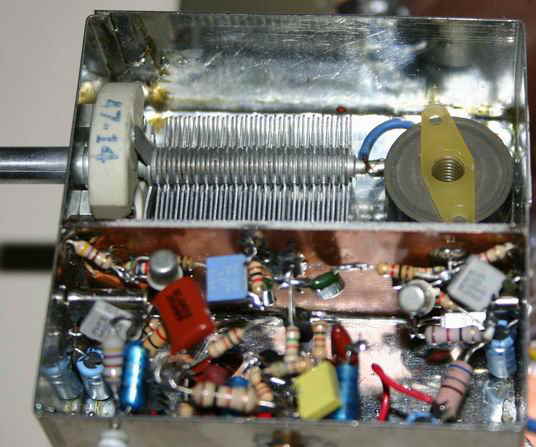
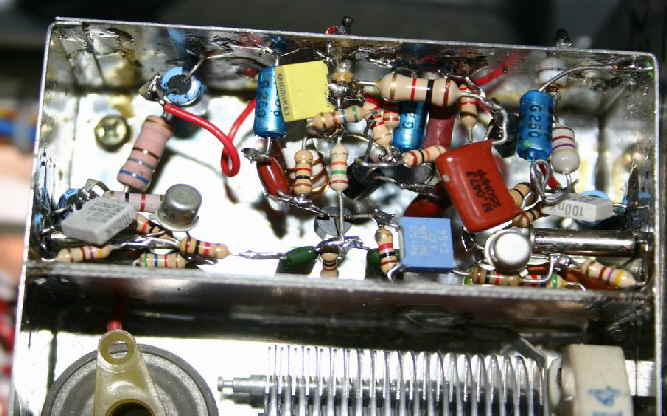
Fig 8, the VXO unit build in 'dead-bug' style.


fig8

Resize of fig902

fig9

Resize of fig1002

fig10

03-07-2006 update

Resize of IMG_0869

fig11

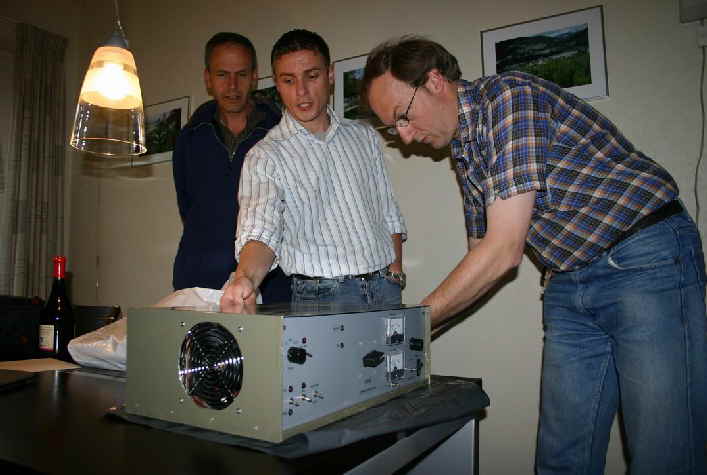
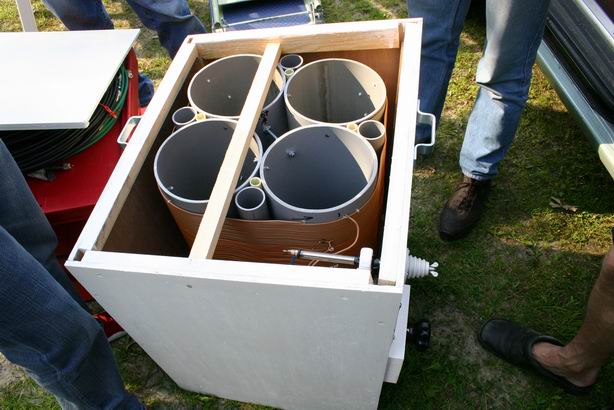
opening the transmitter case, with Arend and Jelmer looking

Resize of band_switch1

fig12

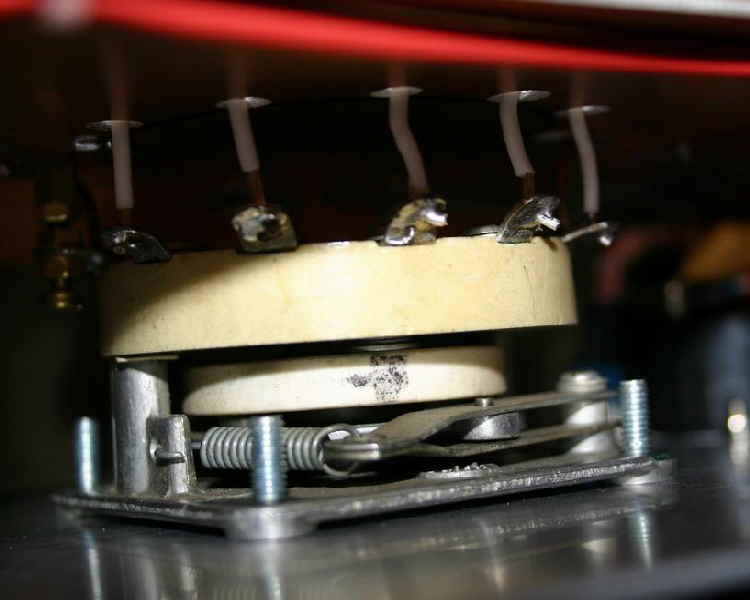
the band switch in detail

Resize of safety1

fig13

50-70V input, with its fuse holder

Resize of topview1

fig14

vswr1

fig15

output filter and swr/pwr measurement/protection circuit

Resize of vfo_1

fig16

another look at the VXO

Resize of front1
Resize of front4
Resize of rear1
Resize of dick1

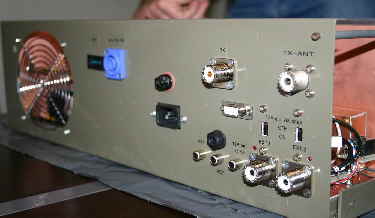
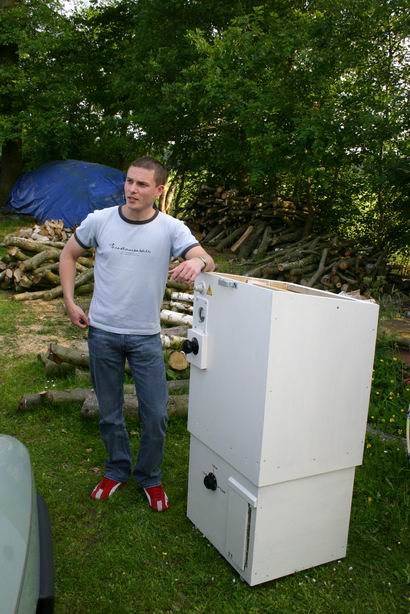
Rear picture showing some of the extra features: 2 separate RX antenna inputs, with the possibility to switch 12V on the coaxial cable in RX mode for remote control of relais, pre-amp etc.

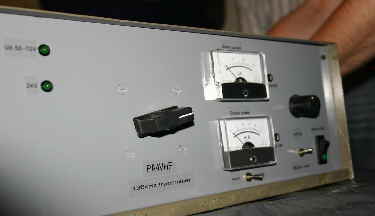
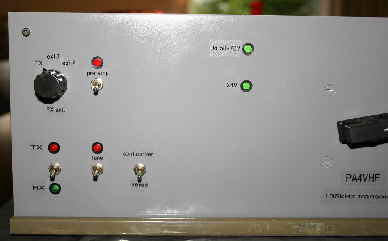
Front pictures from left to right you'll see the RX antenna switch: RX ant = TX ant or ext.1, ext. 2
there is the possibility to switch in an internal pre-amp, abt. 15dB switches for manual TX/RX, cont. carrier or CW and a switch which makes it possible to tune the VXO whilst listening for the exact frequency.

At the right side of the front there is the mains switch for the internal 12/24V power supply as well as the VXO

frequency adjustment.

An option that will be added later is a fixed X-tal controlled frequency or DDS. Switch is already mounted, hi.
Meters measuring drain current and power (forward or return)

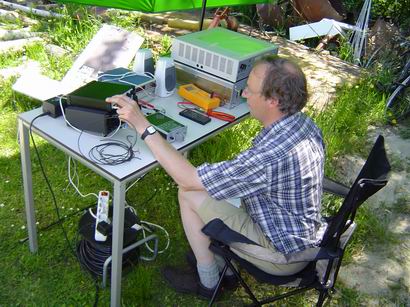
That's me Dick PA4VHF.

Resize of DSC02650_1

fig16

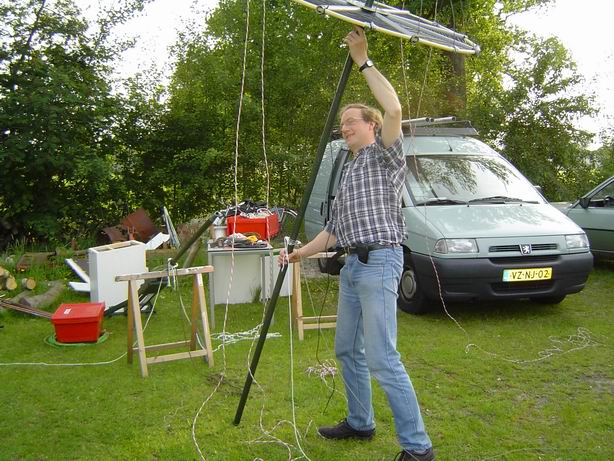
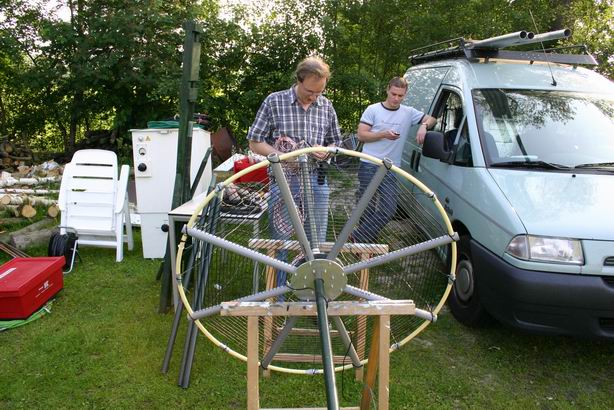
building up the short top loaded portable vertical

Resize of IMG_1293

fig17

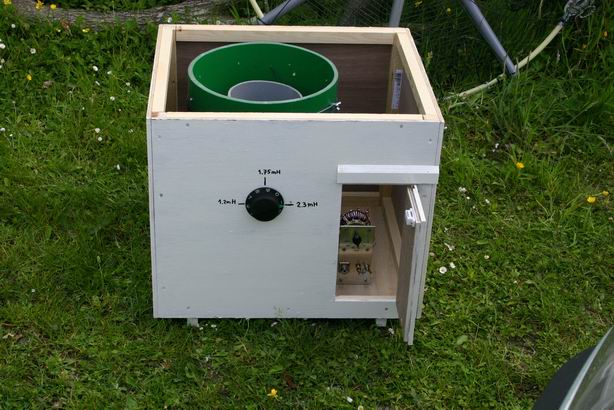
the main variometer, with the first step-up transformer just visible behind the little 'door'

Resize of IMG_1295

fig18

another view at the variometer

Resize of IMG_1297

fig19

the upper unit, containing the main antenna coil, switch and antenna current meter

Resize of IMG_1304

fig 20

variometer and antenna coil mounted together; "ready for use"

Resize of IMG_1314

fig21

final work at the toploading wires

Resize of DSC02657_1

fig22

Dick, PA4VHF working G3KEV on 136kHz.....

Since last 'fielday-test' lot of things has been changed:  UPDATE: 23-08-2006

- The old step up transformer 50 Ohm to 50-250Ohm has been completely rebuild.
- The N30 material is changed to 3C85; now the temperature rise is much lower.
- An extra antenna current meter is placed at the 'cold-end' of the system, into the
  ground lead

Because the original nice looking meter/circuit is too close to the loading coil giving faulty measurements.
The output transformer from the TX is completely rebuild. I was using taps shorted to ground, but that didn't work.
Now using taps connected to the output, which make it possible to change power in 6 steps between roughly 200Watt and 500Watt output.

Measured efficiency between DC-input and RF output over 50 Ohm, is around 80%.
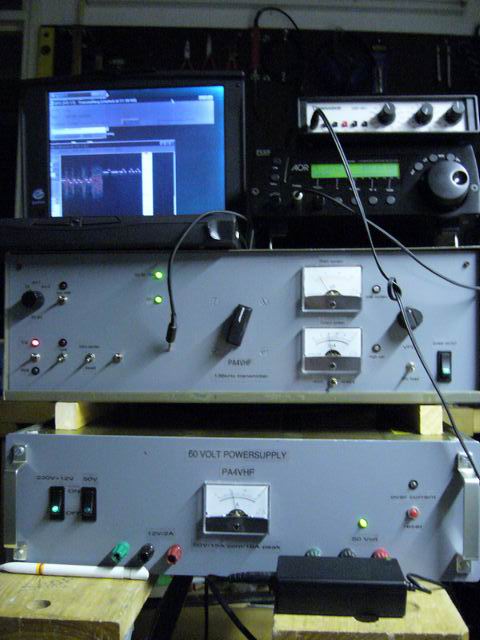
The station has been upgraded for QRSS and DFCW work by adding an extra fixed frequency oscillator on 137.7Hz which can be FSK keyed as well.
 
The computer is connected directly to the transmitter with an little opto-coupler interface mounted inside the transmitter.
First DFCW and QRSS3 QSO's where made by using a simple back garden antenna.
Next goal is to optimize the receiving end (software)
picture: pa4vhf final test set-up, working DFCW/QRSS fig 23
 

fig 23 DFCW/QRSS

Rotation of P1000189


More pictures and info to come later...............

Will be continued....

Dick, PA4VHF