
The 20m monoband 4-1000 amplifier, by Jelmer (pa5r), Herman (pa0ten) and Frans (pa5ca)
Last update 23 September 2008,
After two years of doing virtually nothing Herman and Frans decided to carry on with the 4-1000 Amp.
Jelmer is busy on a other project, rebuilding / scaling a MRI amp. to a nice amp for 15 meter.
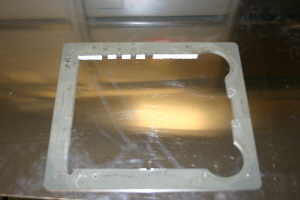
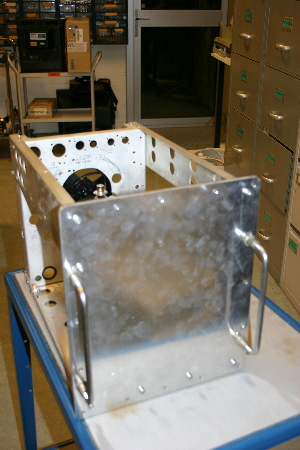
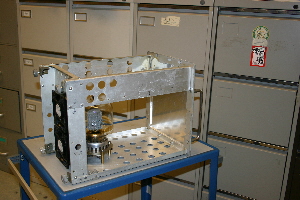
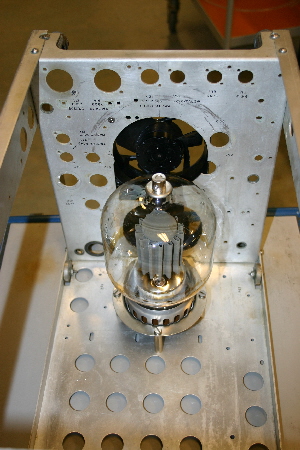
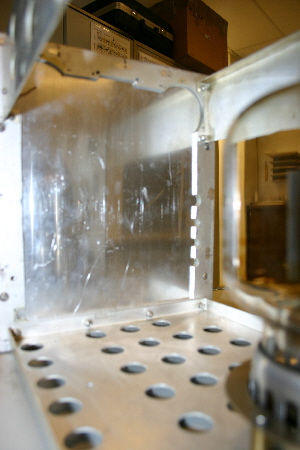
We noticed that the housing for the 20m amp. was not perfect so we found a new and more suitable chassis for the tube.
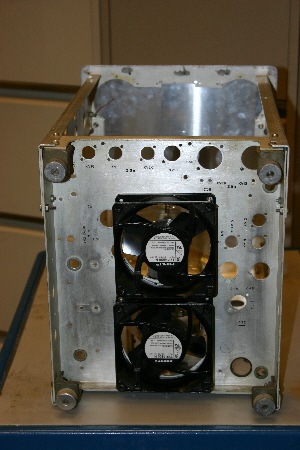
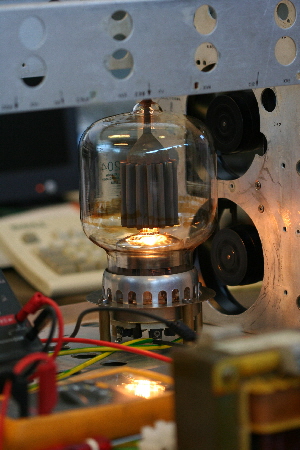
We had to make a new front panel, cooling the tube stays a challenge. Only the filament produces 150W.
So probably we have to add one fan at the front of the tube.
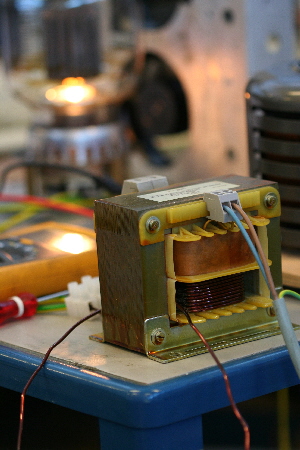
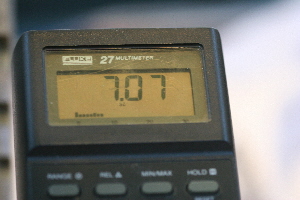
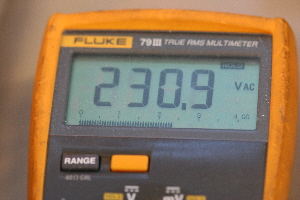
The filament transformer originally was 24V so I took of
some windings and got her down to 7.07V, so nee dto add at least one or two windings again in order to get 7.4V. As you can see still something to do Hi.
Last update 8 May 2006
The PA6Z contest group always strives for station improvement.
A vital part of a multi-multi HIGH POWER contest station is the amplifier. So far, we mostly use commercial amps like the SB220, available from the operators during the contests. In the future, we want to move to dedicated amps
for contest use only. Having found a reliable supply of (used) 4-1000 high power tetrode tubes, we decided to start building a contest proof amplifiers ourselves.
This story will grow during the build, so it is like the
amp itself, not finished. Regular updates during the building process will be made available.
What band to start?
Having a tube that is more than capable of delivering legal limit power, we thought what band to
tackle first. We have commercial amplifiers available for all bands. First, 80 or 40m was preferred, as these band can be very crowded during the big contests, and having a good signal on these bands is a must. But our main
problem here is our RX capability, which still needs attention. Every amateur knows that your TX signal has to match your RX capabilities, otherwise you won't benefit from your big signal and will only cause frustration at the
other end. Unfortunately, many contesters don't give much about this rule… So our thought was to start on 20m, were listening is so much easier and a big signal at the other end will lure other people to give it a try.
PA6Z has a plan;
One of our excising amps gives us problems almost every contest. It's a home made 80 – 10m amplifier using a TB4-1250 and it's very old. We decided to sacrifice this amp and rebuild it so we can reuse
some of the components and the housing. First we made a short list of what the new amp was going to be like:
|
|
|
remark |
|
Tube |
4-1000A |
|
|
Plate voltage |
3000V |
|
|
Configuration |
Grounded grid |
|
|
Power supply (separate) |
3200V / 1.0A |
|
|
Metering |
Ua, Ia, PWR and SWR |
Build in directional coupler |
|
Input network |
C-L-C PI configuration |
Fixed |
|
Output network |
C-L-C PI configuration |
Fixed plate C, loading C 50% variable |
|
|
|
|
The build quality and all components have to be rated for a 2kW RF amplifier so we should not expect
problems during a contest. All individual critical parts like plate and filament chokes, RF capacitors, TRX relays and so on will all be measured extensively before they can be build in.
Power supply;
First thing to do was (re)building a reliable and safe high voltage power supply. In photo 1, the remains of the old supply are shown. After a quick study, we concluded that we only wanted the power transformer and the
metal box!
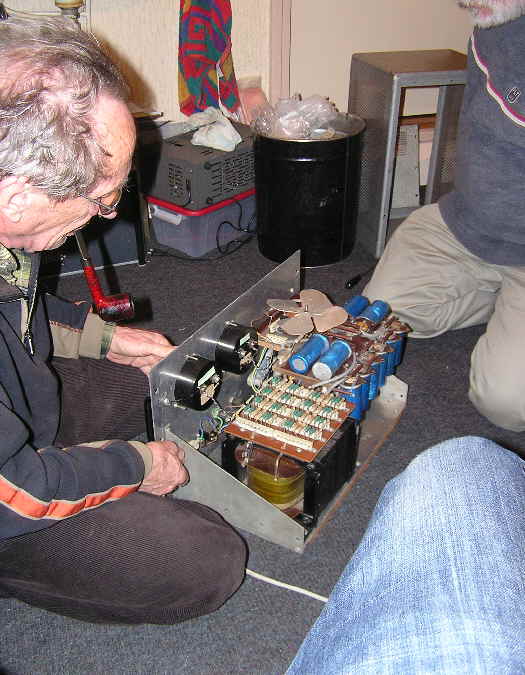
Photo1: Old power supply
The excising supply had a variac to gradually increase the anode voltage. We took it out to
save a lot of weight and replaced it with a startup resistor to limit the inrush current. The high voltage power transformer was OK, delivering 1800V AC / 1.5 ampere at 220V primary power. What had to be replaced were the diode
banks in the rectifier circuit and the storage capacitors. Original capacitance was only 35uF at 3500V, a bit too thin. The new rectifier is made of 4x1N5408 in series, two of those in parallel for each branch of the full wave
rectifier. Resistors and small capacitors were placed parallel to each diode. The storage capacitors were replaced by new 8x500V / 1000uF in series, see photo 2. .
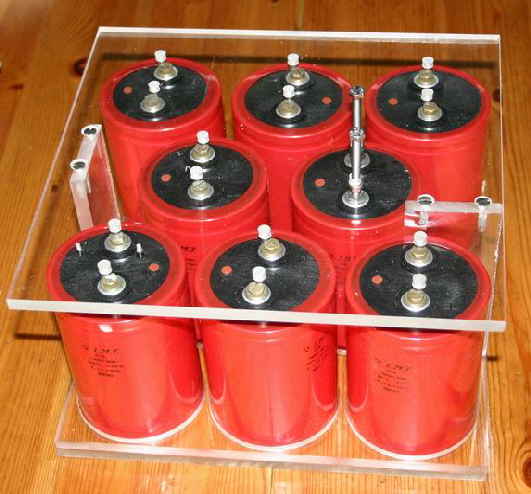
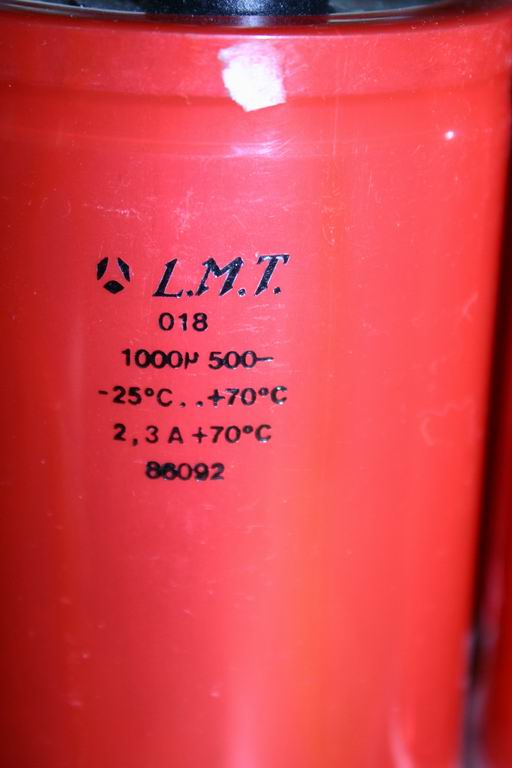
Photo 2: new storage capacitor bank
This gives a total of 4000V and 125uF capacitance, so we can switch off the power
supply half way a contest and operate on the stored energy for the remaining 24 hours HI.
Amplifier;
In the mean time, the first projects for the amplifier part were started. On photos 3 and 4, you see the
machining and the result of the new plate cooler for the tube.
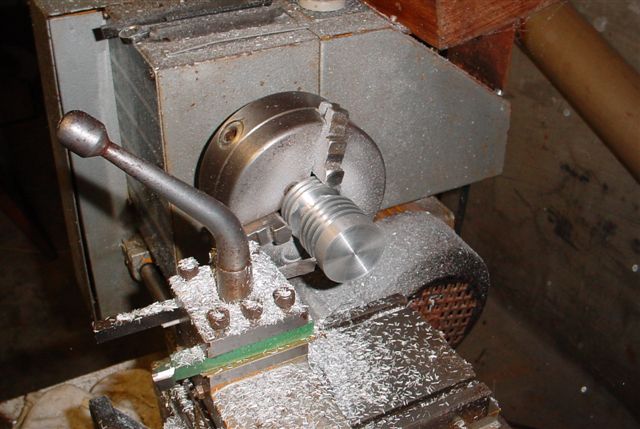
Photo3
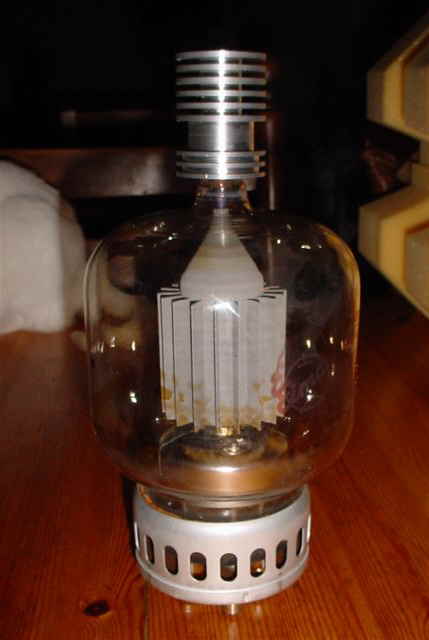
Photo4
More will follow as the work continues…